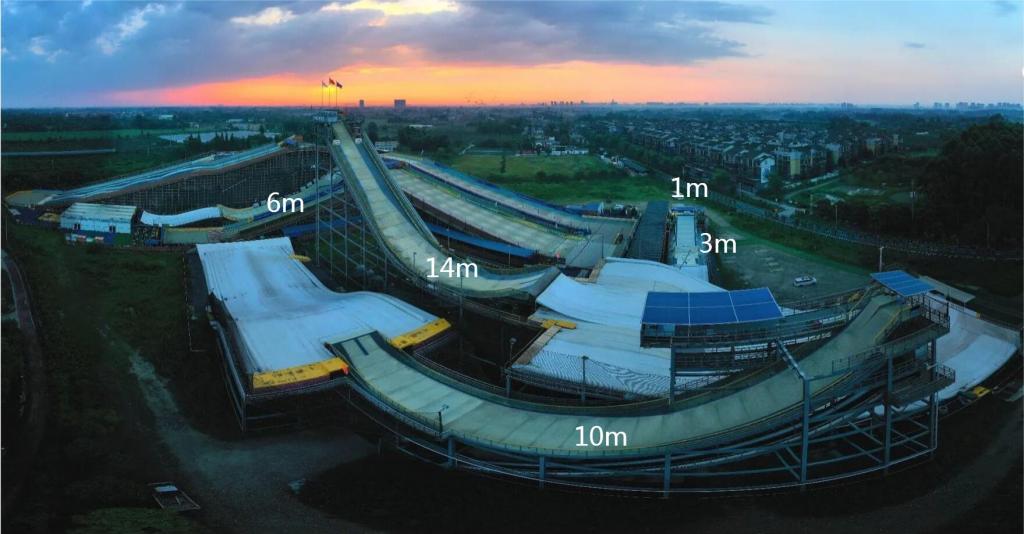
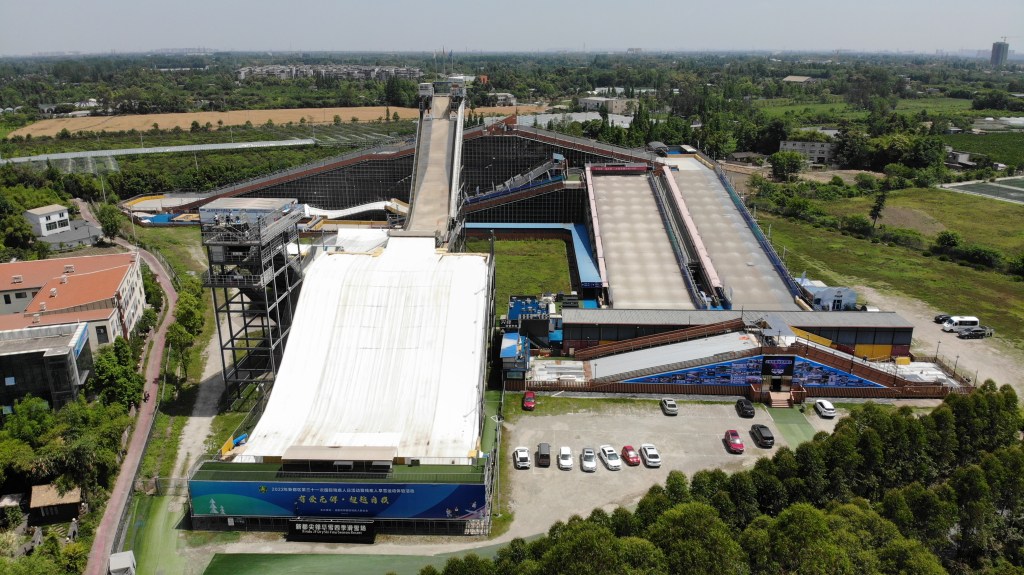
This group of airbag jumps is set up on the east side of JF dry ski Four Seasons Ski Resort, consisting of 1m, 3m, 6m, 10m, and 14m Airbag jumps. The purpose is to meet the training needs of athletes at different levels, including beginners, enthusiasts, and professional teams.
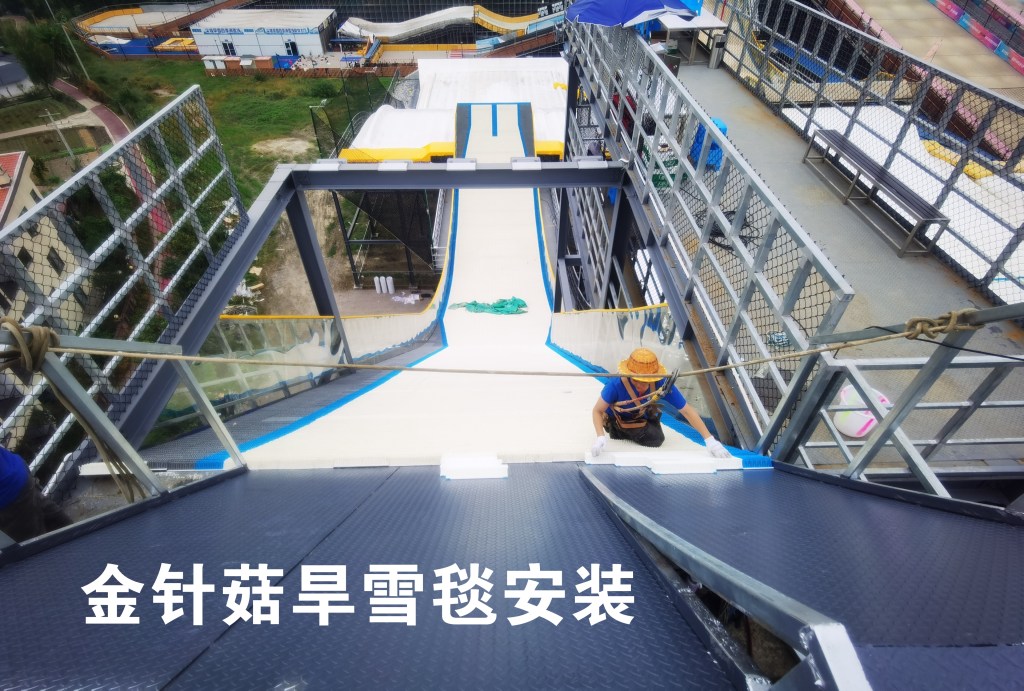
The materials of all dry slopes are made of the same type of Enoki mushroom dry ski mats used in the FIS World Cup competition and other users.
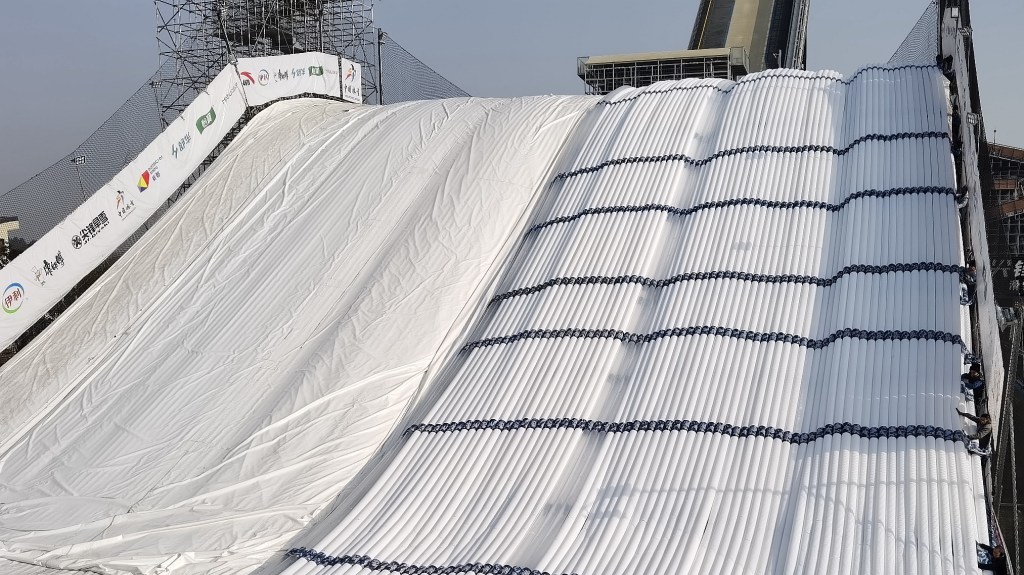
And the airbags are made of the “straw” landing material independently developed by JF dry ski company. Athletes and coaches favor its safety and simulation.
All jumps are equipped with dry ski magic carpets, so users don’t have to use their feet to return to the starting deck.
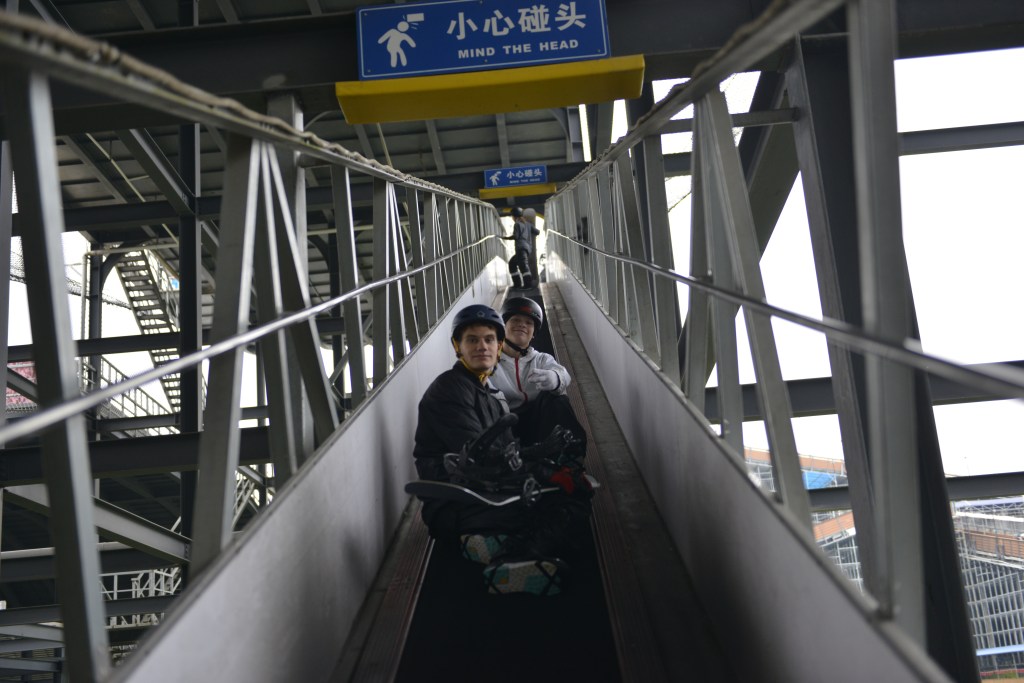
The 1m Bag Jump
It is used for mass skiers to convert to jump enthusiasts, and is used for entry-level bag jump practice. Every 4 hours is an independent business period.
Take-off to knoll is 1 meter, the total length is 32.4 meters (the departure platform is 2.2 meters long, the in-run section is 18.2 meters long, and the air bag is 12 meters long), the total height is 6 meters, the main slope is 20 degrees, and the width is 12 meters.
The ski slope uses JF dry ski mats, the air bag is “straw style”, and athletes reach the starting platform via a magic carpet.
It was built in 2023. A large number of youth ski teams, club students, and student summer training camps gathered here for training.
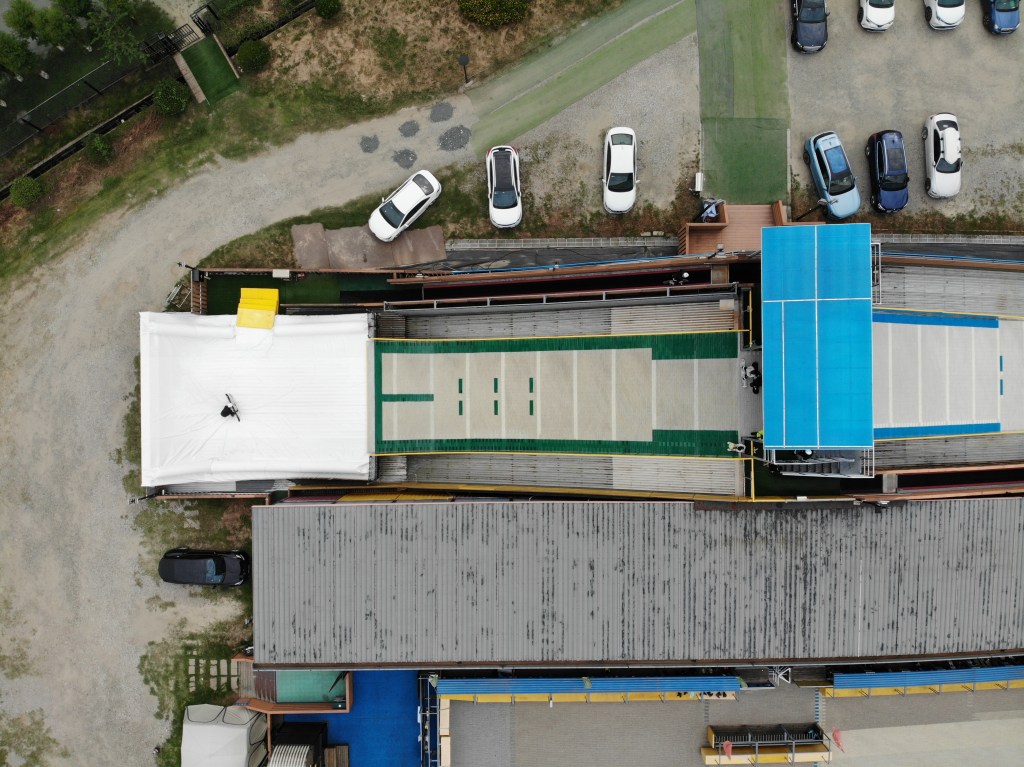
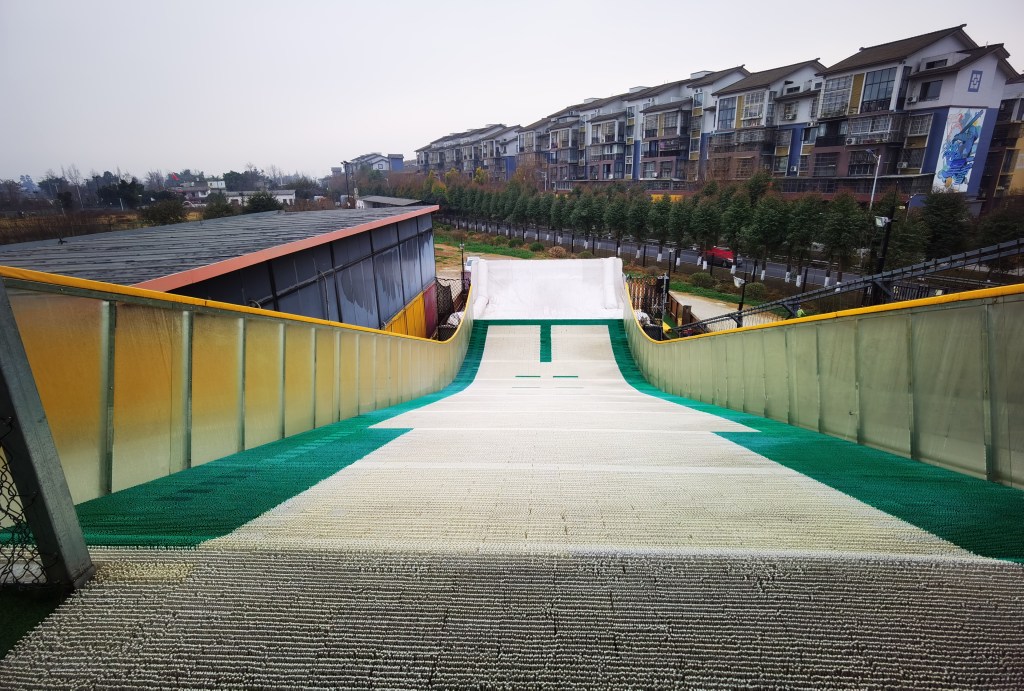
The 3 m Bag Jump
Used for beginner ski jumpers to practice jumping movements. Every 4 hours is an independent business period.
The Take-off to knoll is 3 meters, the total length is 40 meters (the departure platform is 2 meters long, the in-run slope is 23 meters long, and the air bag is 15 meters long), the total height is 9 meters, the main slope is 24 degrees, and the width is 12 meters.
The slope uses JF dry ski mats, the air bag is “straw style”, and athletes reach the starting platform through a magic carpet.
Opening in 2023.
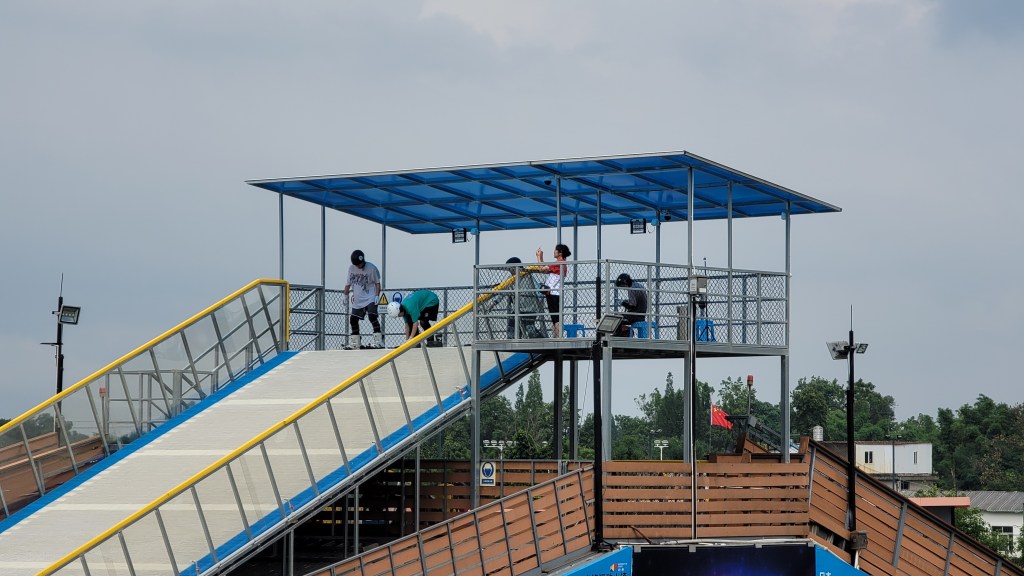
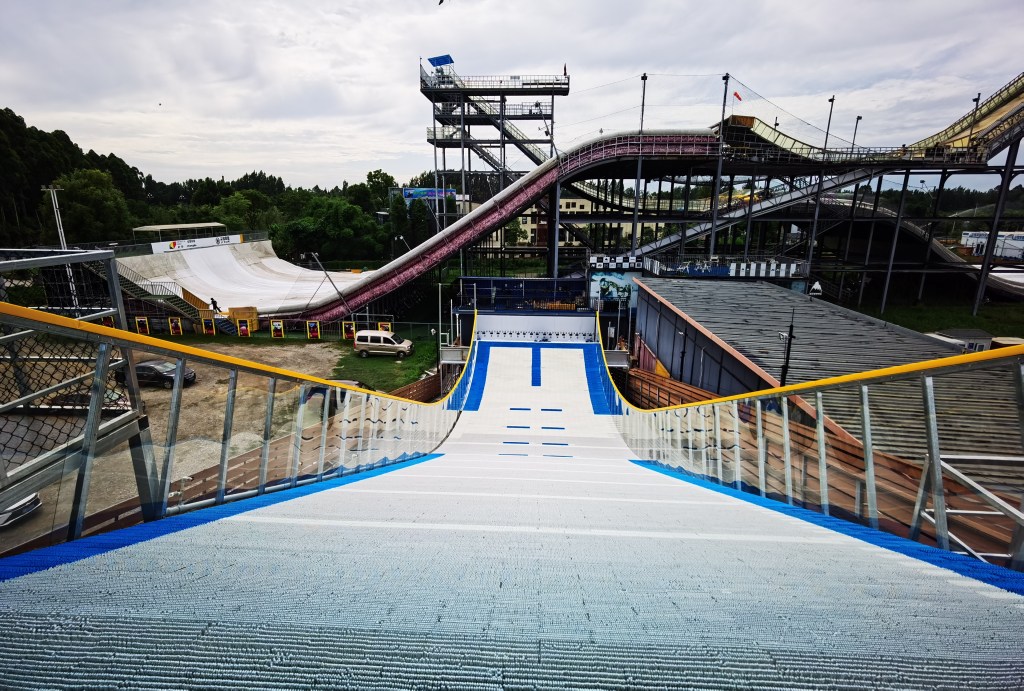
The 6m Airbag jump
It can be used for the special auxiliary training of Mogul aerial turning movements in the Winter Olympics competitions, and the training and selection of new athletes for professional freestyle skiing and snowboarding teams. At the same time, this facility is also favored by enthusiasts who love jumps. Every 2 hours is an independent business cycle.
Take-off to knoll is 6m, with a total length of 86.4 meters (the departure platform is 3.6 meters long, the in-run area is 52.8 meters long, and the airbag is 30 meters long), the total height is 18 meters, the main slope is 27/15 degrees, and the slope is 12 meters wide. The airbag is 12 meters wide.
The slope uses JF dry ski Enoki mat, and the air bag is a “straw” air bag. Athletes reach the starting platform through a magic carpet.
The 6m jumping platform was built in 2018. The original purpose was to meet the needs of enthusiasts for training; starting in 2019, the Beijing Snow Skills Team and the Jilin Snow Skills Team have successively moved in to provide special auxiliary training for aerial turns; with the addition of professional teams for the 2020 Big Air project Settling in training, each team’s training of new athletes every year will also be conducted on the 6m platform to select novices, and gradually transition to 10m and 14m large platform training. Athletes from all echelons of professional teams can complete training and selection at this venue, reducing the cost Professional team management costs and improved training efficiency.
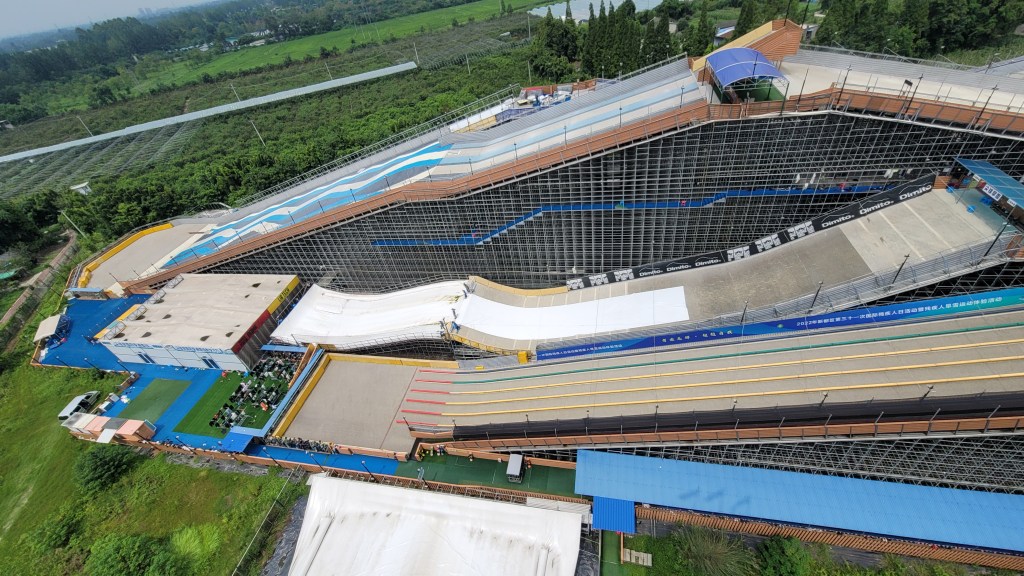
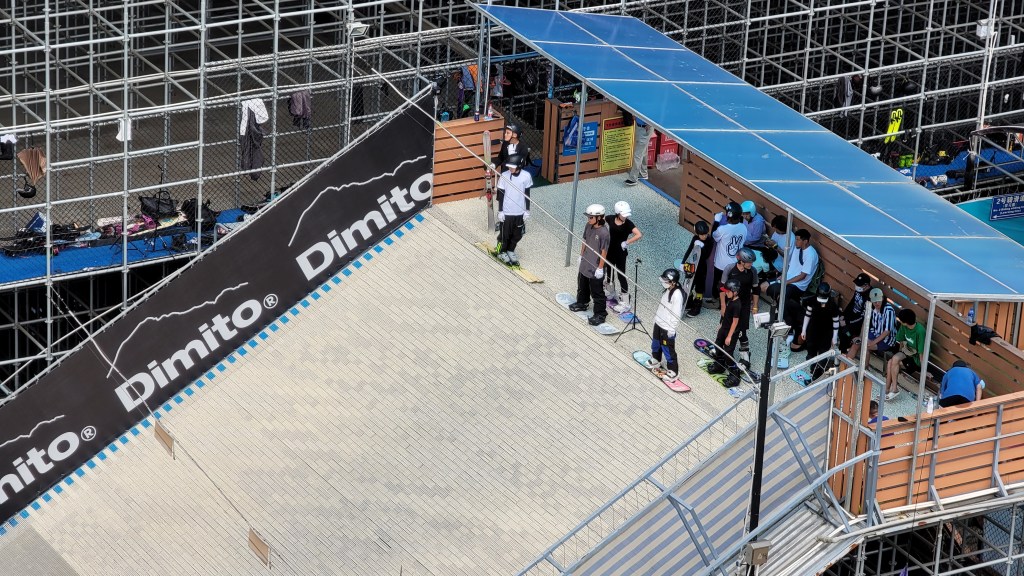
The 10m Airbag jump
It can be used for summer training of Big Air and Half Pipe in the Winter Olympics competitions. The operating hours are 08:00-22:00, and every 2 hours is an independent business cycle.
Take-off to knoll is 10m, with a total length of 103 meters (the starting platform is 2 meters long, the in-run is 43 meters long, and the air cushion is 58 meters long). The total height is 28 meters, the main slope is 40 degrees, the slope is 8 meters wide, and the air cushion is 26 meters wide. rice.
The ski slope uses JF dry ski mats, the airbag is “straw style,” and athletes reach the starting platform via a magic carpet.
It has been built in 2022. In addition to the BIGAIR team, the U half-pipe skills team will give priority to the 10m jump for special auxiliary training in aerial turns. China’s outstanding half-pipe athletes Cai Xuetong, Wang Ziyang and Li Fanghui have trained here many times.
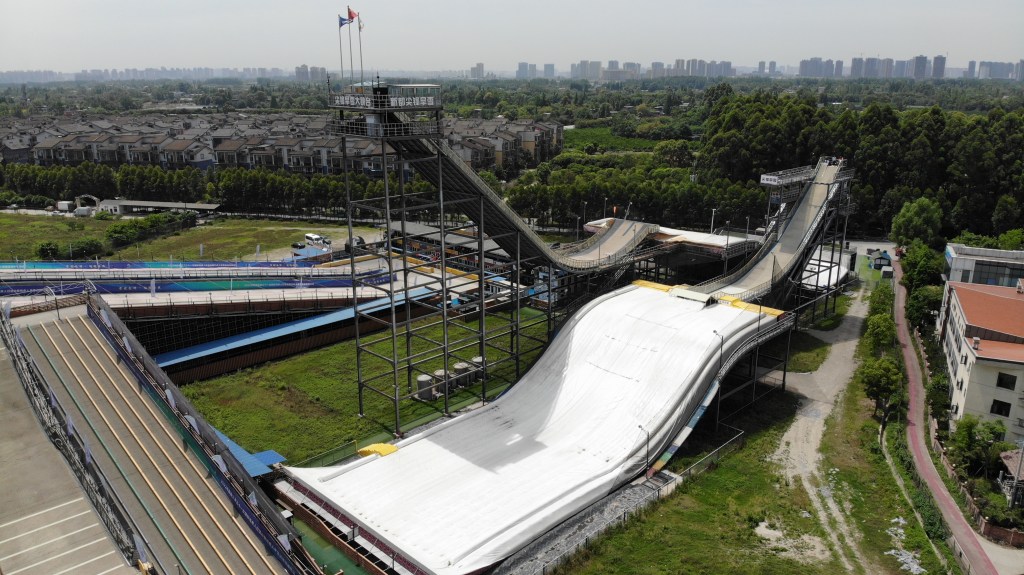
The 14m Airbag jump(Dry ski BIG AIR)
It was specially built for the Big Air training for the Winter Olympics events. The operating hours are 08:00-22:00, and every 2 hours is an independent business cycle.
Take-off to knoll is 14m, with a total length of 112.6 meters (the departure platform is 2.3 meters long, the in-run is 56.9 meters long, and the airbag is 53.4 meters long), the total height is 43 meters, the main slope is 40 degrees, the slope is 10 meters wide, and the airbag is 30 meters wide.
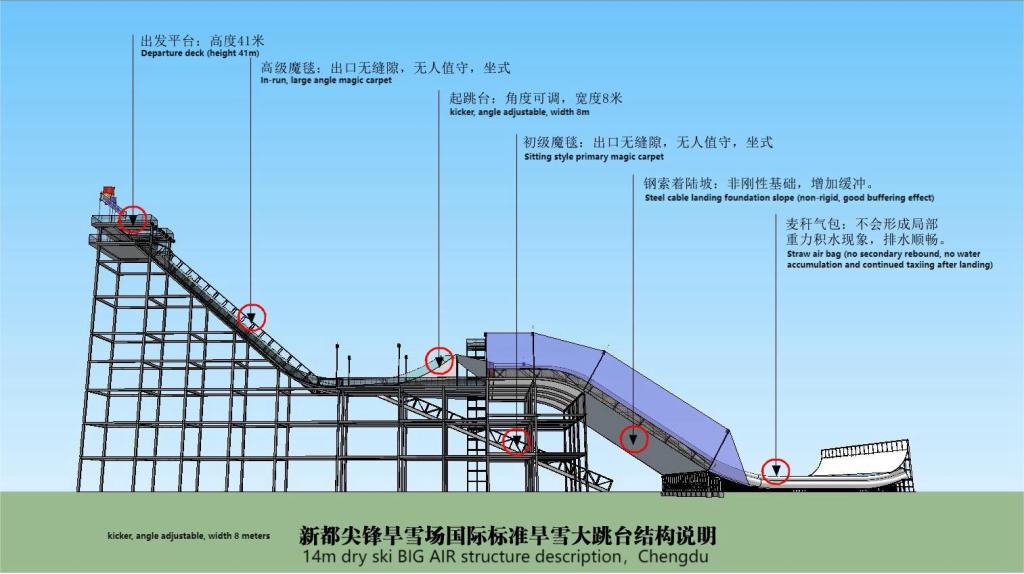
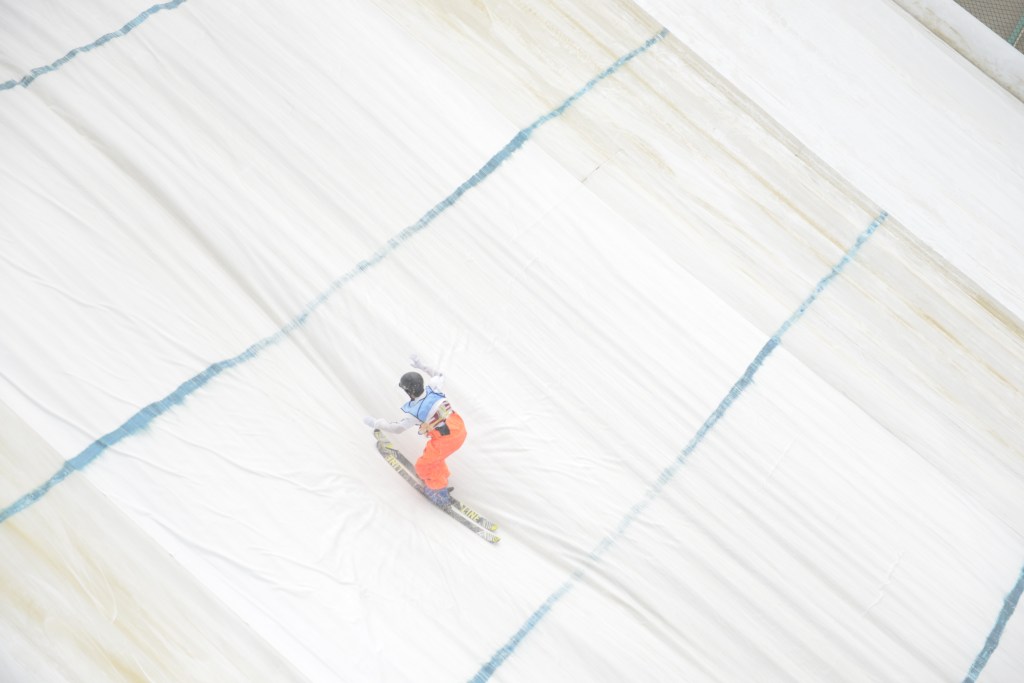
The slope is made of Enoki mushroom dry ski mat with independent intellectual property rights of JF dry ski company. This material has been successfully used in professional training centers worldwide, such as Japan’s QUEST ski training chain training camp, Austria’s Banger Park, and Australia’s Jindabyne National Ski. Sports training centers, Genk Ski Resort in Brussels, Belgium, Clapham Ski Resort in Sweden, Calgary Olympic Park Ski Resort in Canada, etc., all use JF dry ski mats to replace real snow, especially in October 2023, when the International Snow Federation will hold the World Cup in Switzerland for the first time. JF dry ski pads were introduced in the station competition. In the FIS official website news, JF DRY SKI was finally mentioned. “During Wednesday’s training, athlete feedback was very positive. Some athletes said they did not even notice the difference, and some athletes thought that JF DRY SKI is even better than real snow at the drop-in (starting point).”
The airbag is different from the traditional giant airbag. Instead, it uses the “straw air bag” invented by Mr. JF, which comprises about 300 independent air tubes paved along the slope. It has the following advantages:
(1)It can absorb vertical gravity and decompose it downwards, left, and right, effectively solving the side effects of the upward rebounds of traditional airbags and ensuring the safety of athletes (avoiding secondary impacts).
(2)Local pressure will not affect the overall plane angle of the airbag. If the snowboard lands correctly, the athlete can slide for a distance without stopping due to dents.
(3)Since there are no depressions, the problem of instant water accumulation in the buffer area is avoided. The small drainage holes on the surface film of the airbag also solve the problem of complex drainage of traditional airbags.
(4)Athletes reach the starting deck through a high-angle unique magic carpet, which saves athletes’ physical strength and improves training efficiency.
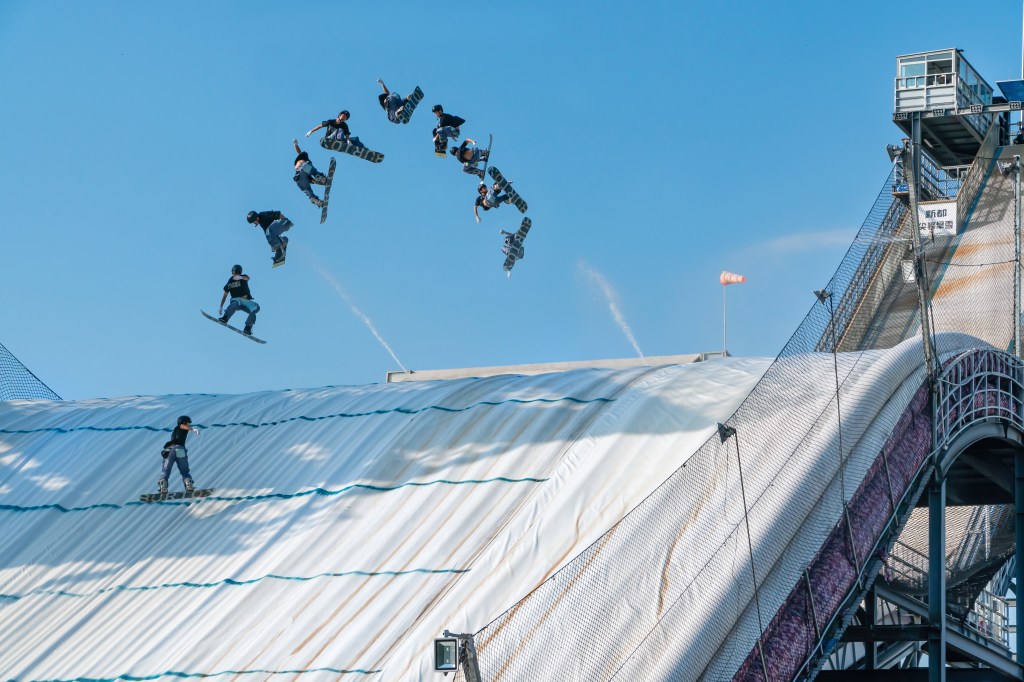
Since the 14m BIG AIR was built in 2020, about 200 athletes from China’s freestyle and snowboarding BIG AIR national, provincial, and foreign teams have completed off-season training here every year. The freestyle skiing women’s big platform for the 2022 Beijing Winter Olympics Gold medalist Gu Ailing once trained here before the competition, and Su Yiming, the men’s BIG AIR gold medalist in snowboarding at the 2022 Beijing Winter Olympics, regularly trains here.
Since completing the 14m big platform, the Chinese national and provincial teams have held big platform competitions here several times. In 2023, the 2023-2024 National Freestyle Skiing and Snowboarding Airbag Big Jump Youth Championship was held. This is a national-level event for this project. The competition was held on an airbag for the first time.
 JFdryski slopes